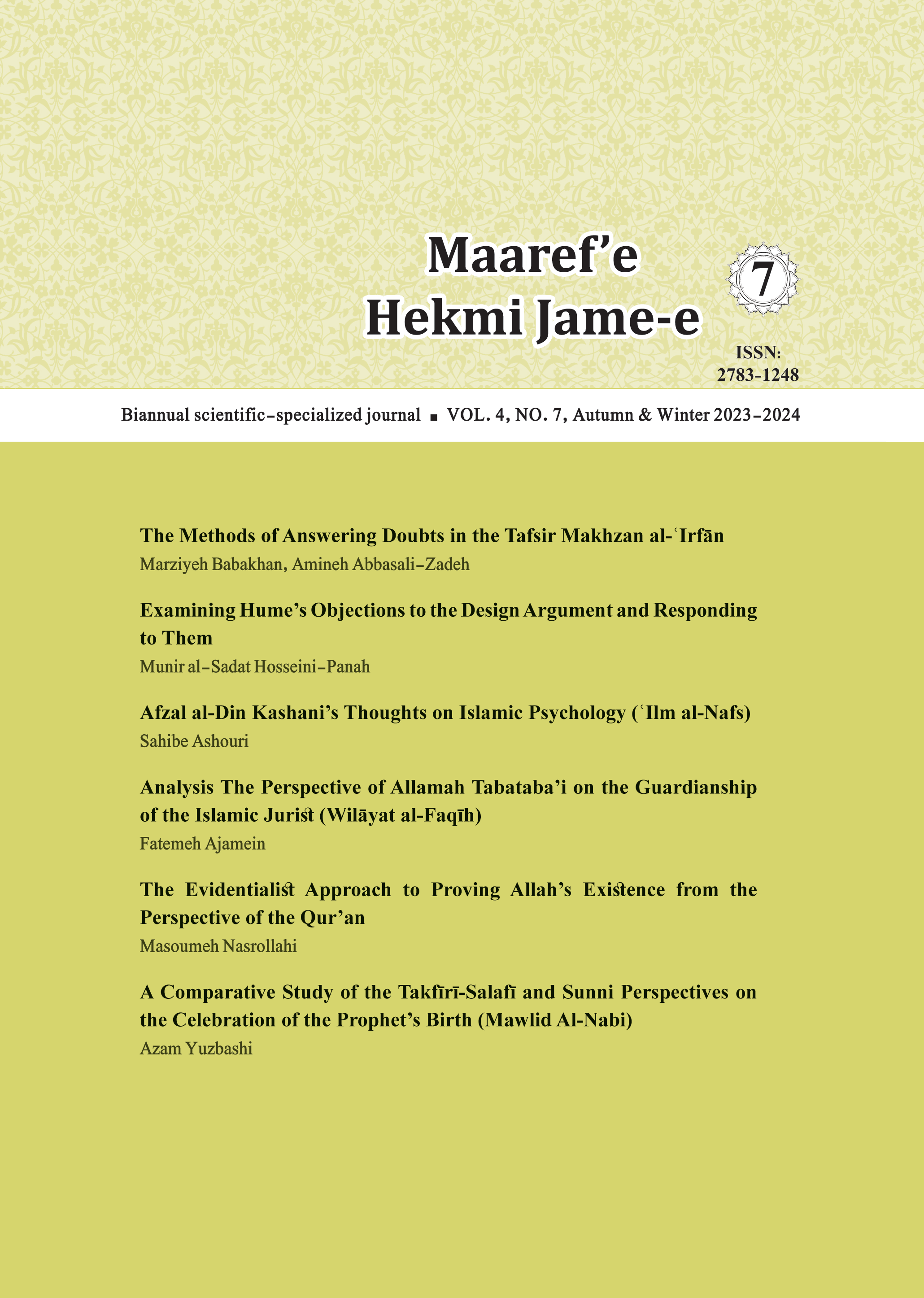
The Perspective of Allamah Tabataba’i on the Guardianship of the Islamic Jurist (Wilāyat al-Faqīh)
Abstract
The theory of the Guardianship of the Islamic Jurist (Wilāyat al-Faqīh) was put into practice after the Islamic Revolution under Imam Khomeini’s leadership, with the support of the people and most scholars. Allamah Tabataba’i is one of the thinkers whose views on the Guardianship of the Islamic Jurist have sparked considerable debate, with two distinctly different interpretations attributed to him. This study aims to uncover the true nature of his perspective on this issue by examining his works through a descriptive-analytical method. In his paper Leadership and Guardianship (Ziʿāmat va Wilāyat) and his commentary on the verses relating to guardianship (wilāyat), he regards the Guardianship of the Islamic Jurist as a self-evident and innate matter, supported by rational explanation. He further elaborates on the details of this issue by discussing topics related to Islamic governance and the characteristics of an Islamic ruler. Another achievement of this study is the examination and refutation of the view denying Allamah Tabatabai’s endorsement of the Guardianship of the Islamic Jurist.
Ajamein, F. (2025). The Perspective of Allamah Tabataba’i on the Guardianship of the Islamic Jurist (Wilāyat al-Faqīh). Judicial Knowledge of Society, 4(7), 63–80.
MLA
Ajamein, F. "The Perspective of Allamah Tabataba’i on the Guardianship of the Islamic Jurist (Wilāyat al-Faqīh)", Judicial Knowledge of Society, 4, 7, 2025, 63–80.
HARVARD
Ajamein, F. (2025). 'The Perspective of Allamah Tabataba’i on the Guardianship of the Islamic Jurist (Wilāyat al-Faqīh)', Judicial Knowledge of Society, 4(7), pp. 63–80.
CHICAGO
Ajamein, F., "The Perspective of Allamah Tabataba’i on the Guardianship of the Islamic Jurist (Wilāyat al-Faqīh)." Judicial Knowledge of Society, 4 7 (2025): 63–80,
VANCOUVER
Ajamein F. The Perspective of Allamah Tabataba’i on the Guardianship of the Islamic Jurist (Wilāyat al-Faqīh). Judicial Knowledge of Society. 2025;4(7):63–80 (In Persian).